

Tag Archive | "Methylprednisolone"

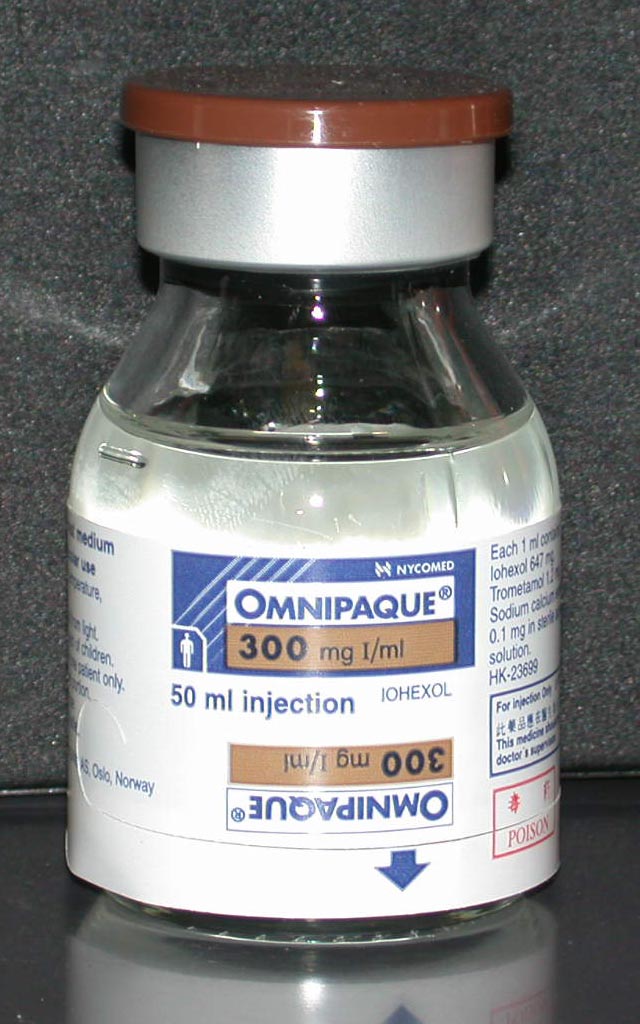
Omnipaque 300

Radiopaque Contrast Use In Pain Medicine

Omnipaque - Iohexol (non-ionic)

By Chris Faubel, M.D. -

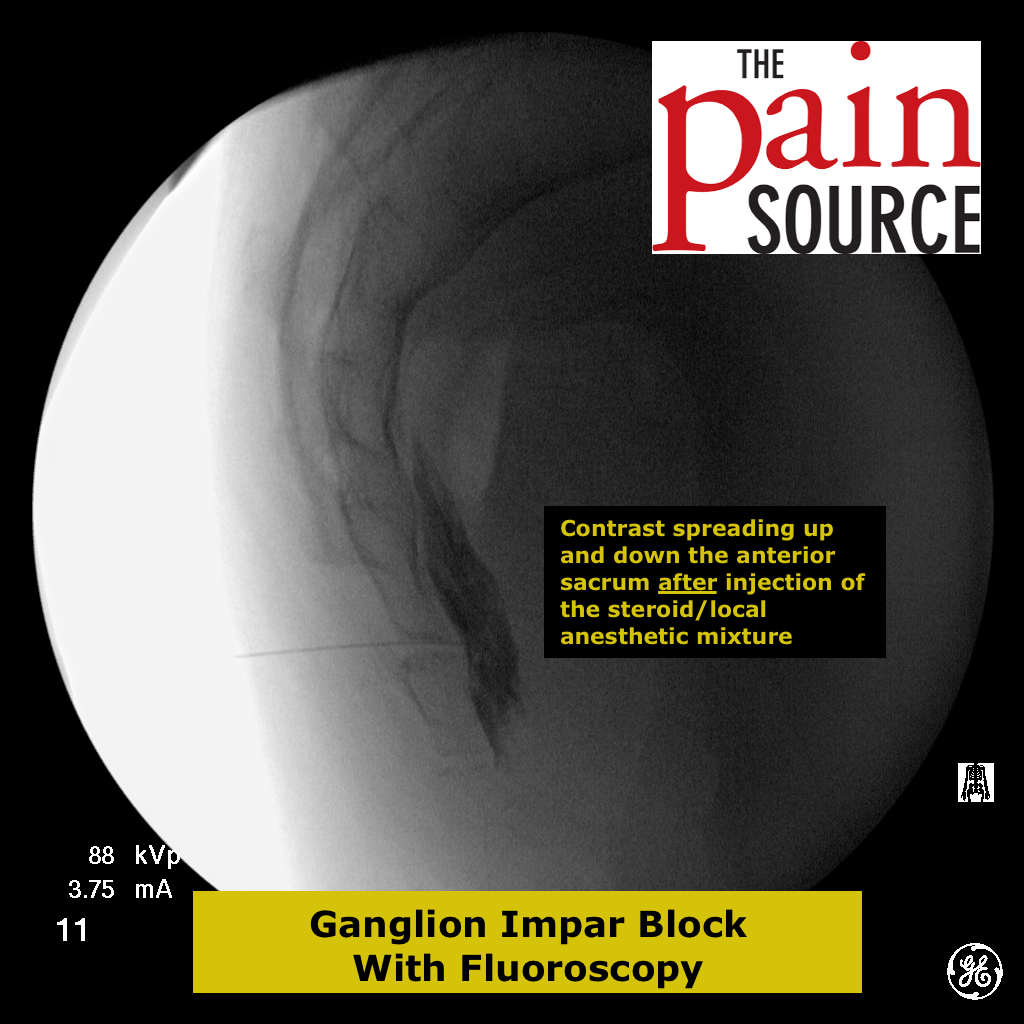
Radiopaque contrast agents are used by pain physicians during fluoroscopically-guided injections and other pain procedures (kyphoplasty, discography).  Their use is essential for confirming needle tip placement for eventual corticosteroid/local anesthetic administration, and to rule out inadvertent intravascular placement of the needle.

Click here for a great video of contrast being injected to confirm correct placement for a transforaminal epidural

The contrast agents are radiopaque because of the iodine content in the solution.  This iodine doesn’t allow penetration of x-rays, and therefore shows up as blackness (opaque) on the fluoroscopy monitor.  Because it is more black than other structures being x-rayed, it is easy to visualize the spread of the contrast agent.  This spread then allows the pain physician to know where the injectate (usually a corticosteroid and anesthetic) will also flow.

These radiocontrast agents can be divided into two categories: 1) Non-ionic.   2) Ionic

  • The non-ionic agents are more hydrophilic, have a lower osmolality, and therefore produce fewer adverse effects (less risk of arachnoiditis or allergic response).  Because of this, we only use non-ionic contrast agents.

The most commonly used contrast agents in pain medicine are iohexol (trade name = Omnipaque) and iopamidol (trade name = Isovue).  These two solutions have a low concentration of iodine (200-300mg/ml), which makes them safe, yet still create good imaging contrast.

Clinical pearl: You can dilute the contrast agent with sterile, normal saline (by up to 25%) and still get sufficient darkening when injected.

Allergies to Shellfish (shrimp, crawfish, lobster, crabs)

  • It has long been medical folklore that patients allergic to shellfish, would also be allergic to iodinated contrast agents because both contained iodine, and therefore there would be cross-reactivity.
  • It has since been shown that the antigenic property of shellfish is actually a particular protein, not the iodine.  [1]
Allergy Skin Testing
  • Injecting a small volume of non-ionic radiocontrast subcutaneously is NOT helpful in predicting whether that patient will have adverse reactions during a procedure.
Adverse Reactions
  • Mild reactions: urticaria (raised, itchy hives), pruritus; rhinorrhea; nausea, brief retching, and/or vomiting; diaphoresis; coughing; and dizziness.
  • Moderate reactions: more vomiting, wider spread urticaria, mild bronchospasm, facial edema, hypotension
  • Severe reactions: hypotension, severe bronchospasm, laryngeal edema, pulmonary edema, seizures, syncope, and death.
  • All of the above are much more common with ionic contrast agents, not the nonionic agents we use in pain medicine.
  • A very large case study in Japan in 1990 (337,647 cases), compared high-osmolar ionic contrasts to low-osmolar nonionic agents (like the Omnipaque and Isovue above).  They found that severe adverse drug reactions to the contrast occurred in 0.22% of the ionic and only 0.04% of the nonionic contrast media. [2]
  • In a large prospective study, the incidence of severe reactions was found to be 0%. [3].  However, in this same study, adverse effects of any severity was seen in 0.7% of patients.
  • Patients with a seafood allergy have a slightly greater risk of having an adverse reaction (of any severity) to IV contrast.  But it should be noted that this correlation was only shown with ionic contrast (which we don’t use), and that the increased risk is roughly the same as patients with allergies to eggs, milk, chocolate, strawberries, or those with asthma.  Also, 85% of patients with a seafood allergy had no adverse reaction at all to the ionic IV contrast. [7]
Gadolinium Contrast as an Alternative
  • For patients with a true history of severe allergic reaction after a prior nonionic contrast administration, gadolinium contrast (usually used as MRI contrast) can be used safely and effectively [4].
Pretreatment Options
  • Some physicians recommend just pretreating patients that are high-risk for adverse reactions, or have had adverse reactions in the past.
  • Three pretreatment regimen examples:
  1. Oral prednisone 20-50 mg, ranitidine (Zantac) 50 mg, and diphenhydramine 25-50 mg orally 12-24 hours prior to exposure by injection. An additional 25 mg of diphenhydramine can be given by IV immediately before contrast injection. [5]
  2. Methylprednisolone 32mg orally 12 hours and 2 hours before the injection. [6]
  3. Oral prednisone 50mg at 13, 7, and 1 hour before contrast injection, with Benadryl 50mg IV, IM, or PO, 1 hours before the contrast. [6]


References:

1) Andreas L. Lopata, and Samuel B. Lehrer.  New Insights Into Seafood Allergy.  Curr Opin Allergy Clin Immunol. 2009;9(3):270-277.

2) Katayama H, Yamaguchi K, Kozuka T, et al. Adverse reactions to ionic and nonionic contrast media. A report from the Japanese Committee on the Safety of Contrast MediaRadiology. Jun 1990;175(3):621-8.

3) Wolf GL, Arenson RL, Cross AP. A prospective trial of ionic vs nonionic contrast agents in routine clinical practice: comparison of adverse effects. AJR Am J Roentgenol. May 1989;152(5):939-44.

4) Safriel Y, Ali M, Hayt M, Ang R. Gadolinium use in spine procedures for patients with allergy to iodinated contrast–experience of 127 procedures.  AJNR Am J Neuroradiol. 2006 Jun-Jul;27(6):1194-7.

5) Anthony H Wheeler. Therapeutic Injections for Pain Management. Medscape.com. Aug 3, 2011.

6) Pradeep Chopra and Howard Smith.  Contrast Agents for the Interventional Pain Physician.  Pain Physician. Vol. 7, No. 4, 2004

7) Beaty AD, Lieberman PL, Slavin RG.  Seafood allergy and radiocontrast media: are physicians propagating a myth? Am J Med. 2008 Feb;121(2):158.e1-4.


Share

Related Content:

Posted in Basic Science, Miscellaneous, Radiopaque ContrastComments (0)

Research – General Epidural Steroid Injections

** click the blue article titles below for the abstracts
note: recent additions will be added to the top of the list

Adverse Effects

1 - Epidural steroid injections do not induce weight gain

  • Curr Drug Saf. 2007 May;2(2):113-6.
  • Prospective evaluation of 100 patients who received a series of three lumbar ESIs (once a month for three months)
  • 40 mg methylprednisolone acetate (Depo-Medrol) for each injection
  • No significant change in weight gain
Share

Related Content:

Posted in Epidurals, General ESI Studies, Procedures, ResearchComments (0)

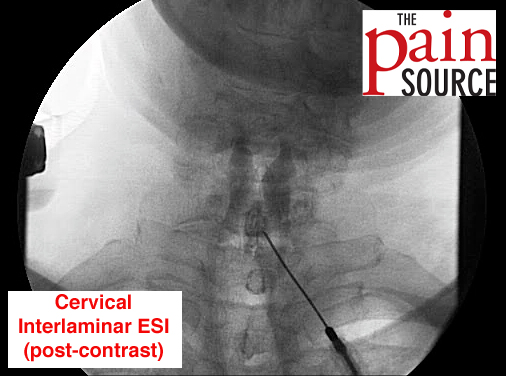
Cervical Interlaminar Epidural Steroid Injection (post-contrast)

Which MRI Finding Predicts Benefit From Cervical Epidural Steroid Injections?

By Chris Faubel, MD –

Image courtesy Dr. Hazem Eissa

Am J Phys Med Rehabil. 2009 Mar;88(3):239-46
MRI prediction of therapeutic response to epidural steroid injection in patients with cervical radiculopathy.
Fish DE, Kobayashi HW, Chang TL, Pham Q.Department of Orthopaedics, Physical Medicine and Rehabilitation, David Geffen School of Medicine at UCLA, Los Angeles, California, USA.
Get the abstract here

Summary of Study

-

  • Purpose: to find out if particular MRI finding can predict therapeutic success from cervical interlaminar epidural steroid injections (C-ILESIs) in patients with cervical radiculopathy
  • Read the full story
Share

Related Content:

Posted in Cervical Epidurals, Cervical Spine, Journal ClubComments (0)

Cervical transforaminal with digital subtraction

Complications of Cervical Transforaminal Epidural Steroid Injections

By Chris Faubel, MD –

Case Presentation:

A 39-year-old right-handed hair dresser presents with a 3-month history of severe right upper extremity pain (radiating down the posterior arm, forearm, and into the middle finger).  She has received conservative management with medications and physical therapy, but the severe pain continues to adversely affect her functional status (unable to perform many ADLs and cut hair at work).

Physical exam revealed 5/5 MMT of the bilateral upper extremities, but with decreased sensation over the dorsal aspect of the right middle fingerDecreased right triceps reflex compared to the left.  Negative Hoffman’s. No ankle clonus or hyperreflexia.  Spurling’s test was positive on the right.

Plan: Perform a cervical transforaminal epidural steroid injection (C-TFESI).

Questions: What type of corticosteroid should be used?  What should you know about the cervical anatomy and risk of performing a cervical transforaminal ESI?

Introduction

Cervical epidural steroid injections (C-ESIs) are particularly effective in the treatment of cervical radiculopathy [13].  The transforaminal approach is preferred over the interlaminar approach when particular nerve roots are desired to be targeted.  Because of this, cervical transforaminal epidural steroid injections (C-TFESIs) are often referred to as “cervical selective nerve root injections/blocks” — although some research has shown the injections aren’t as specific to just one level, as once believed.

Many neurosurgeons will request specific nerve roots blocked for diagnostic purposes when deciding whether to proceed with surgery.

The fear of spinal cord and brain infarctions has caused many pain medicine practitioners to abandon the transforaminal approach for cervical epidural steroid injections.  The perceived, relative safety of the interlaminar approach has led to its preference when corticosteroids in the cervical epidural space are deemed beneficial for the patient.  Here, I will present the appropriate anatomy and evidence-based knowledge surrounding this transforaminal approach, the associated risks, and finally, methods to minimize those risks.

Anatomy of the Cervical Spine

No injection should be performed without first knowing the anatomy of the area being injected.  This is especially true when using the transforaminal approach for cervical epidural steroid injections.

  • Comparison with Lumbar Spine

    Source: eOrthopod

    • More forward angling of the transforaminal space (exit of nerve root)
    • Large transverse foramen with the vertebral artery (not shown in eOrthopod picture to right)
    • Presence of the spinal cord
  • Intervertebral Foramen (Cervical)
    • The cervical nerve root exits the inferior part of the foramen, just above the correspondingly numbered vertebral body (example: the C7 nerve root exits above the C7 vertebra).
    • Vertebral arteries traverse through the foramina in the transverse processes (transverse foramen) and reside in the anterior aspect of the intervertebral foramen.
    • Radiculomedullary branches from the vertebral arteries and other cervical arteries (deep cervical and ascending cervical arteries) traverse the anterior foramen as well.
      • As you will see below, this anterior placement of the radicular arteries is not 100%.
  • Vascular Anatomy – Spinal Cord

    Source: ncbi.nlm.nih.gov

    • The anterior 2/3 of the spinal cord is supplied by the ONE anterior spinal artery, with the posterior 1/3 supplied by the TWO posterior spinal arteries.
    • Anterior Spinal Artery
      • Arises from the coalescence of the two vertebral arteries.
      • Supplied along the cord length by segmental radicular arteries (including the artery of Adamkiewicz near the lower thoracic spine) every 3-5 vertebral segments
        • Watershed areas are created by this segmental vascular supply, and this allows for areas of the cord to be particularly sensitive to ischemia.
    • Posterior Spinal Artery
      • Arises from the vertebral arteries and the posterior inferior cerebellar arteries (PICA)
      • Also receives segmental supply from the radicular arteries
  • Vascular Anatomy – Cervical Spine

    Source: Mayo Foundation for Medical Education and Research

    • Vertebral arteries

      • Arise from the subclavian arteries, enter the transverse foramen at the C6 level, and travels superiorly to the C1 level (atlas).
    • Cervical radicular arteries
      • Previously thought to reside exclusively in the anterior aspect of the intervertebral foramen, and therefore, the posterior foramen was the “safe” target for the needle.
    • A recent cadaveric study by Huntoon [3] shed light on the variability of the vasculature traversing the cervical intervertebral foramina.
      • Of the 95 foramina dissected, seven (7) had spinal branches in the posterior foramen, potentially forming radicular or segmental medullary vessels to the spinal cord.
        • Of the seven spinal branches above, three were included in deep dissections, and in fact DID contribute to segmental medullary arteries and radicular arteries.
      • One additional ascending cervical artery formed a segmental medullary artery that joined the anterior spinal artery.
        3 – Huntoon MA. “Anatomy of the cervical intervertebral foramina: vulnerable arteries and ischemic neurologic injuries after transforaminal epidural injections”. PAIN. 117, 2005; 104-111
      • Note: see the cadaver dissection below (click image to enlarge), which shows a deep cervical artery giving rise to a radicular artery running along with the C8 spinal nerve, through the intervertebral foramen, and joining the anterior spinal artery.

Needle Target Zone

  • Because the vasculature is predominantly in the anterior foramen, the target “safe” zone is in the…
    • Posterolateral aspect of the foramen
      • Just anterior to the superior articular process
      • Posterior to the targeted cervical nerve root
      • Posterior to the vertebral artery

Two Studies Examining the Complications Following Cervical TFESIs

  • Huston et al. [11]
    • Prospective study
    • 89 injections in 37 patients (fluoroscopically-guided CSNRI)
    • Immediate effects
      • Pain at injection site (22.7%); Increased radicular pain (18.2%); Lightheadedness (13.6%); Nausea (3.4%)
    • One-week phone interview
      • Pain at injection site and nonspecific headache
    • 3-month physician interview
      • Only persistent, increased spine pain in 2 subjects (all other symptoms resolved)
  • Ma et al. [12]
    • Retrospective study
    • 1036 injections in 844 patients (fluoroscopically-guided CSNRI) – MUCH larger ‘n’ than the Huston study
    • Immediate followup and patients to call if any complications arise
    • Overall complication rate = 1.64%
      • 5 headaches; 6 transient neurologic deficits (pain or weakness); 1 hypersensitivity reaction; 1 vasovagal reaction; 1 transient global amnesia
    • The positioning of the needle medially or laterally in the posterior foramen was NOT associated with more complications.
    • The anterior positioning of the needle in the IVF WAS associated with more minor complications
    • Conclusions
      • No catastrophic complications occurred in this series of 1036 nerve blocks.”
      • “Our results suggest that, with our technique, cervical nerve blocks are relatively safe procedures.”
    • Note: although it keeps calling them “nerve blocks”, steroid was indeed used with each procedure (not just lidocaine).  Celestone Soluspan was used for the majority of cases, until it became unavailable commercially; then Depo-Medrol was used.

Neurologic Sequelae After Intravascular Injection

  • Mostly reported via case reports
  • Corticosteroid used
    • Every case report I could find showed the physician used either Depo-Medrol or Kenalog.
    • NO case reports were found that used Celestone Soluspan, bethamethasone sodium phosphate (compounded), or dexamethasone (Decadron)
  • Some cases used sedation, but not all.
  • Most adverse reactions started within minutes after the injection.
  • Most had negative aspiration before the injection.
    • One case had a positive aspiration of blood, then the needle was repositioned, and after a now negative aspiration, the corticosteroid was injected.

Proposed Reasons for the Neurologic Sequelae

  • Vascular injection of various corticosteroids or their partner ingredients (benzyl alcohol, polyethylene glycol, contrast)
  • Arterial perforation leading to dissection/thrombosis [1]
  • Needle-induced vasospasm
  • Needle penetration with resultant hematoma

Properties of Various Corticosteroid Preparations

See “Corticosteroids in Pain Medicine” for more details of the various steroids

  • Two classes of corticosteroids
    • Soluble (also called ‘solutions’ or ‘non-particulates’)
    • Insoluble (aka ‘suspensions’ or ‘particulates’)
  • Examples of each class
    • Soluble
      • Dexamethasone (Decadron)

        Betamethasone in blood - Derby et al. "Size and aggregation of corticosteroids used for epidural injections"

      • Betamethasone sodium phosphate (from a compounding pharmacy only, because it isn’t commercially available)
    • Insoluble
      • Methylprednisolone acetate (Depo-Medrol)
      • Triamcinolone acetonide (Kenalog)
      • Betamethasone acetate (available as Celestone Soluspan when combined with betamethasone sodium phosphate)
  • Two studies have looked at the particle sizes and how much various preparations aggregated [6,7]
    • Kenalog had far greater particle size and aggregation than the others [7]

      Kenalog in blood - Derby et al. "Size and aggregation of corticosteroids used for epidural injections"

    • Depo-Medrol also formed large aggregations in the study by Tiso et al [6]
    • Celestone Soluspan formed large aggregations only in the Derby et al study  [7 ]
    • It is speculated that these large aggregates occlude smaller vessels, and thus lead to infarction.
  • Injection of methylprednisolone vs dexamethasone vs prednisolone into the vertebral artery of pigs - see summary of study here

    • None of the pigs injected with methylprednisolone survived
    • ALL of the pigs injected with Decadron and prednisolone recovered fully from the general anesthesia and had NO neurologic deficits.
  • J Bone Joint Surg Am. 2008 Sep;90(9):1932-8.
    Perils of intravascular methylprednisolone injection into the vertebral artery. An animal study.
    Okubadejo GO
    ,

Are Non-Particulates As Effective As Particulates For Cervical Transforaminal Epidural Steroid Injections?

  • Dreyfus et al (2006) found no statistically or clinically significant difference between the use of dexamethasone (12mg) and triamcinolone (40mg). [9]
    • n = 30
  • Lee et al. (2009) studied the general effectiveness of C-TFESIs, and whether triamcinolone was more effective than dexamethasone [13]
    • n = 159
    • “…no significant difference between particulate or non-particulate steroid for the effect of cervical TFESI”
    • Cervical TFESIs were effective in 76.1% at short-term (one month) followup.
    • The patient having had a previous cervical operation dropped the effectiveness down to 46.2%.

Methods to Avoid Intravascular Injection

  • Contrast-Enhanced Fluoroscopic Guidance
    • Aspiration of blood into the syringe was the original method of detecting intravascular needle placement.
    • In 2003, Furman et al. published a prospective study looking at the incidence of intravascular penetration of the needle during C-TFESIs. [10]
      • 19.4% incidence in 504 fluoroscopically-guided, contrast-enhanced C-TFESIs.
      • Aspiration of blood was 97% specific, but only 45.9% sensitive.
  • Use of live fluoroscopy
    • Some interventional pain physicians will get the needle in the target area, inject the contrast, and then take a few short fluoro images to see if the contrast washes away.
    • But because of the rapid washout of contrast material by fast-flowing arterial vessels, many recommend use of LIVE fluoroscopy while injecting the contrast in order to better visualize the vascular uptake.
    • Complications can still occur
      • There have been multiple case reports of spinal cord infarctions, cervical hematomas, and vertebral artery dissection leading to death after C-TFESIs with fluoroscopy guidance
  • Digital Subtraction

    14 - Rathmell JP. "Toward Improving the Safety of Transforaminal Injection"

    • This is basically taking a fluoroscopic image, injecting the contrast medium, then taking another shot which only shows what’s new between the two images (like contrast being washed away by blood vessels).
    • This is especially helpful because the dark contrast on the fluoroscopic image may not be seen amongst the other dark bone and dense soft tissue.  **see the image to the right [14]
  • Test Dose of Lidocaine
    • Even if you use live fluoroscopy and digital subtraction, the needle tip might still be in an arterial, without knowing it.
    • So some pain physicians recommend a test dose of lidocaine before injecting the corticosteroid.
    • If you’re in an artery supplying the brain or spinal cord, the patient will likely experience a seizure or transient weakness within 2 minutes.
    • Case report [15]
      • After the injection of local anesthetic, the patient developed quadriplegia.  The injection was terminated.  The neurologic impairment resolved after 20 minutes observation.
      • Conclusion: Despite correct placement of the needle for a cervical transforaminal injection, injectate may still enter a cervical radicular artery.  Whereas local anesthetic, so injected, appears to have only a temporary effect on spinal cord function, particulate steroids may act as an embolus and case permanent impairment.
  • Avoid Particulate Steroids
    • No case reports exist (that I’m aware of) with the use of betamethasone sodium phosphate, dexamethasone, or even Celestone.
  • Using Blunt Needles
    • Some think a blunt needle is best because you are less likely to penetrate vasculature.
    • Preclinical study
      • Dog renal arteries
      • 5/5 attempts with sharp needles penetrated the artery
      • 0/8 attempts with blunt needles
  • Avoid Use of Sedative Agents
    • Sedation is used by many pain physicians in order to minimize patient movement, and therefore reduce the likelihood of complications.
    • Some believe this sedative state interferes with the monitoring of neurologic complications; patient is less able to respond to intra-neural injection, sudden weakness or paresthesias,  dizziness or nausea.
    • But, serious complications have occurred in patients with no sedation, little sedation, and full sedation.
  • Use Alternate Route to Transforaminal Space
    • Use an interlaminar approach, and then thread a catheter up to the desired foramen.
      • Difficult to do because the foramen is rather anterolateral
    • Another approach is to take a standard lateral approach to the foramen, but then stop short of the foramen and thread a flexible catheter to the desired location.
      • The thought is that the catheter certainly won’t penetrate any vessels.

Final Thoughts

  • Use minimal to no sedation
  • Guide the tip of the needle towards the posterior foramen (anterior aspect of the superior articular process), then slowly advance under LIVE fluoroscopy
  • Use extension tubing to minimize needle movement
  • Contrast-enhanced LIVE fluoroscopy with digital subtraction
  • Test dose of lidocaine –> sensorimotor testing in 2 minutes
  • Use of non-particulate steroids!!!

————————————————————————————-

REFERENCES:
1 – Malhotra G, Abbasi A, Rhee M.  “Complications of Transforaminal Cervical Epidural Steroid Injections“.  SPINE. Vol 34, No 7, 2009: 731-739

2 – Hoeft MA, Rathmell JP, Monsey RD, Fonda BJ.  “Cervical Transforaminal Injection and the Radicular Artery: Variation in Anatomical Location Within the Cervical Intervertebral Foramina”. Reg Anes and Pain Med. Vol 31, No 3, 2006: 270-274

3 – Huntoon MA. “Anatomy of the cervical intervertebral foramina: vulnerable arteries and ischemic neurologic injuries after transforaminal epidural injections”. PAIN. 117, 2005; 104-111

4 – Okubadejo et al. “Perils of Intravascular Methylprednisolone Injection into the Vertebral Artery. An Animal Study”. JBJS. Vol 90, 2008; 1932-1938

5 – Hoang et al. “CT Fluoroscopy–Assisted Cervical Transforaminal Steroid Injection: Tips, Traps, and Use of Contrast Material”. AJR 2010; 195:888-894

6 – Tiso et al. “Adverse central nervous system sequelae after selective transforaminal block: the role of corticosteroids”. Spine J 2004; 4:468-74

7 – Derby et al. “Size and aggregation of corticosteroids used for epidural injections”. Pain Med 2008; 9:227-34

8 – Scanlon et al. “Cervical transforaminal epidural steroid injections: more dangerous than we think?  Spine J 2007;32:1249-56

9 – Dreyfuss P, Baker R, Bogduk N. “Comparative effectiveness of cervical transforaminal injections with particulate and nonparticulate corticosteroid preparations for cervical radicular pain.” Pain Med 2006;7:237-42

10 – Furman et al. “Incidence of intravascular penetration in transforaminal cervical epidural steroid injections.”  Spine 2003;28:21-25

11 – Huston CW, Slipman CW, Garvin C. “Complications and side effects of cervical and lumbosacral selective nerve root injections.” Arch Phys Med Rehabil 2005;86:277-83

12 – Ma et al. “Complications of Fluoroscopically Guided Extraforaminal Cervical Nerve Blocks.”  Journal of Bone and Joint Surgery 2005;87:1025-1030

13 – Lee et al. “Cervical transforaminal epidural steroid injection for the management of cervical radiculopathy: a comparative study of particulate versus non-particulate steroids.” Skeletal Radiol 2009;38:1077–1082

14 – Rathmell JP. “Toward Improving the Safety of Transforaminal Injection” Anesthesia & Analgesia 2009;109(1):8-10

15 – Karasek M, Bogduk N. “Temporary neurologic deficit after cervical transforaminal injection of local anesthetic.”  Pain Med. 2004 Jun;5(2):202-5

Share

Related Content:

Posted in Adverse Effects, Miscellaneous, Risks of Cervical TFESIsComments (1)

Cervical Transforaminal Epidural Injection with Vulnerable Vasculature

Dangers of Cervical Transforaminal Epidurals With Particulate Steroids

By Chris Faubel, MD –

Source: Mayo Foundation for Medical Education and Research

J Bone Joint Surg Am. 2008 Sep;90(9):1932-8.
Perils of intravascular methylprednisolone injection into the vertebral artery. An animal study.
Okubadejo GO
, Talcott MR, Schmidt RE, Sharma A, Patel AA, Mackey RB, Guarino AH, Moran CJ, Riew KD.
Department of Orthopaedic Surgery, Washington University School of Medicine, St. Louis, Missouri, USA. gokubadejo@hotmail.com
Get the abstract here

Summary of Study

  • Purpose: to investigate whether use of particulate steroids carried with it, a greater risk of neurologic damage from cervical transforaminal epidural steroid injections
  • Prospective, exploratory pilot study
  • Animal study – eleven (11) adult, male pigs weighing between 110 and 136 pounds (50-62 kg)
  • Read the full story
Share

Related Content:

Posted in Cervical Epidurals, Cervical Spine, Journal ClubComments (0)

Depo-Medrol

Corticosteroids in Pain Medicine

By Chris Faubel, MD –

Courtesy Life-Extension-Drugs.com

An interesting blurb about the discovery of corticosteroids can be found here .

Common Corticosteroid Preparations

  • Methylprednisolone acetate = Depo-Medrol
  • Triamcinolone acetonide = Kenalog
  • Betamethasone acetate + betamethasone sodium phosphate = Celestone Soluspan
  • Dexamethasone sodium phosphate = Decadron

Steroid Properties

Share

Related Content:

Posted in Basic Science, CorticosteroidsComments (1)


Share

TPS YouTube Videos

About ThePainSource.com

ThePainSource.com was started to provide pain medicine information on neuromusculoskeletal conditions, interventional pain procedures, journal article reviews, and other clinically-relevant information to physicians and other healthcare providers specializing in the treatment of patients with pain.